
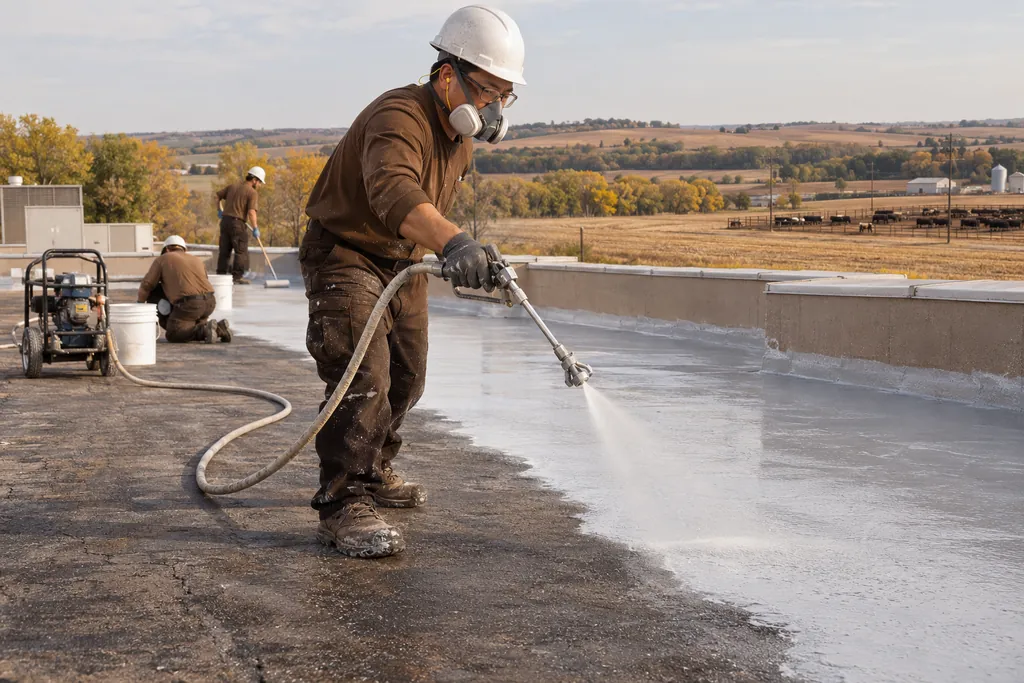
Norfolk Silicone Roof Coating Contractor
Silicone Coating Built for Low Spots That Hold Rainwater
As a Norfolk silicone roof coating contractor, we spray silicone over low-slope steel and flat roof sections where water sits after storms.
- Roof Walked Before Any Price
- Insulation Checked for Water
- Work Staged Around Your Hours
Fit Check
Silicone vs Acrylic Roof Coating for Norfolk Low-Slope Roofs
Norfolk silicone roof coating earns its higher material cost on roofs that pond. Here is how it lines up against the other two choices.
What We Install
Silicone Coating
Acrylic Coating
Spray Foam
Roof Conditions
Low-Slope Problems Silicone Roof Coating Solves in Norfolk
These are the conditions that point a low-slope roof toward silicone.
Rings of dried silt after a rain
Opened laps near the eaves
Slow drains and clogged scuppers
Chalky, worn old coating
Bruises and cuts after hail
Coating Systems
Commercial Roof Coating Options for Norfolk
Silicone is one choice among five. The rest suit roofs that drain well or need insulation.
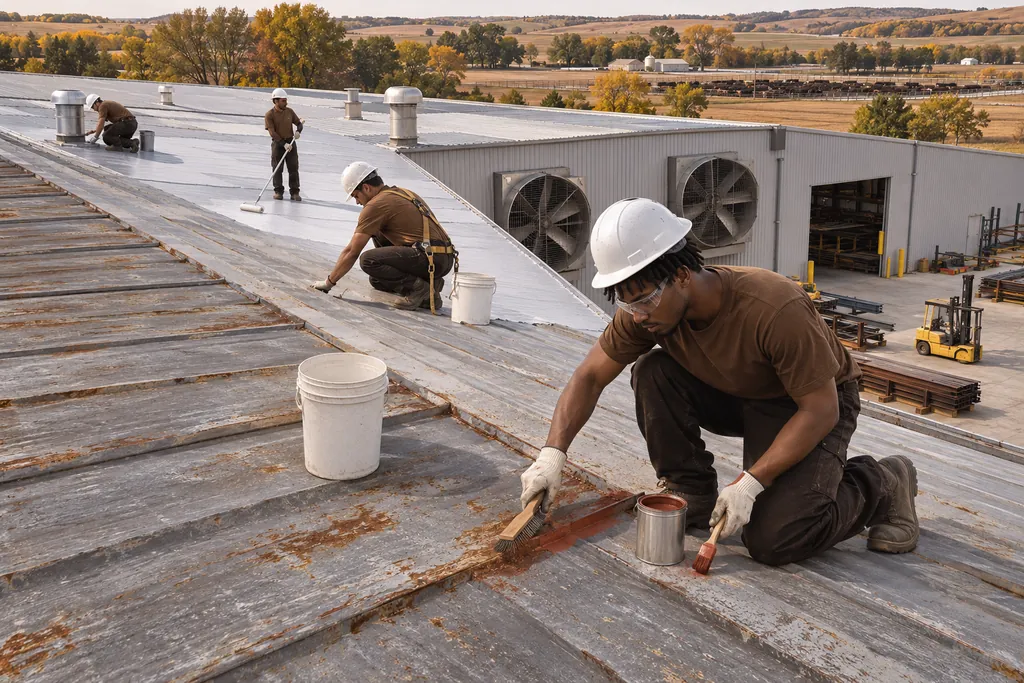
Metal Roof Coating
- Best on: steel shops, plants, and storage buildings
- Watch for: rust holes and wet insulation first
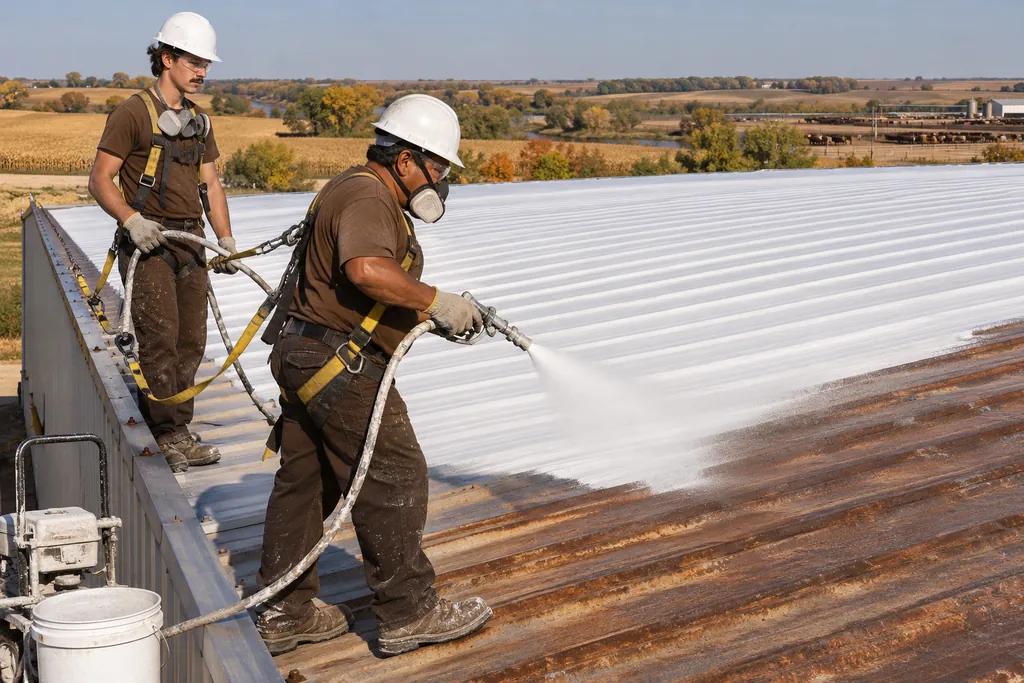
Silicone Roof Coating
- Best on: low-slope roofs where rain sits for days
- Watch for: recoats must stay silicone
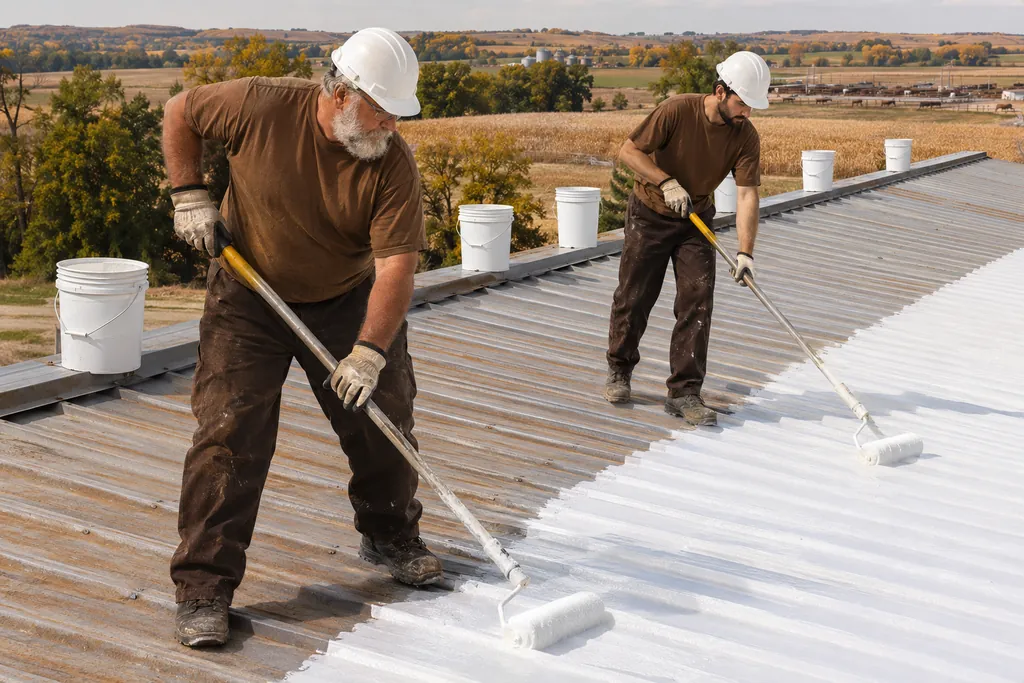
Acrylic Roof Coating
- Best on: sloped panels that drain within a day
- Watch for: needs warm, dry days to cure
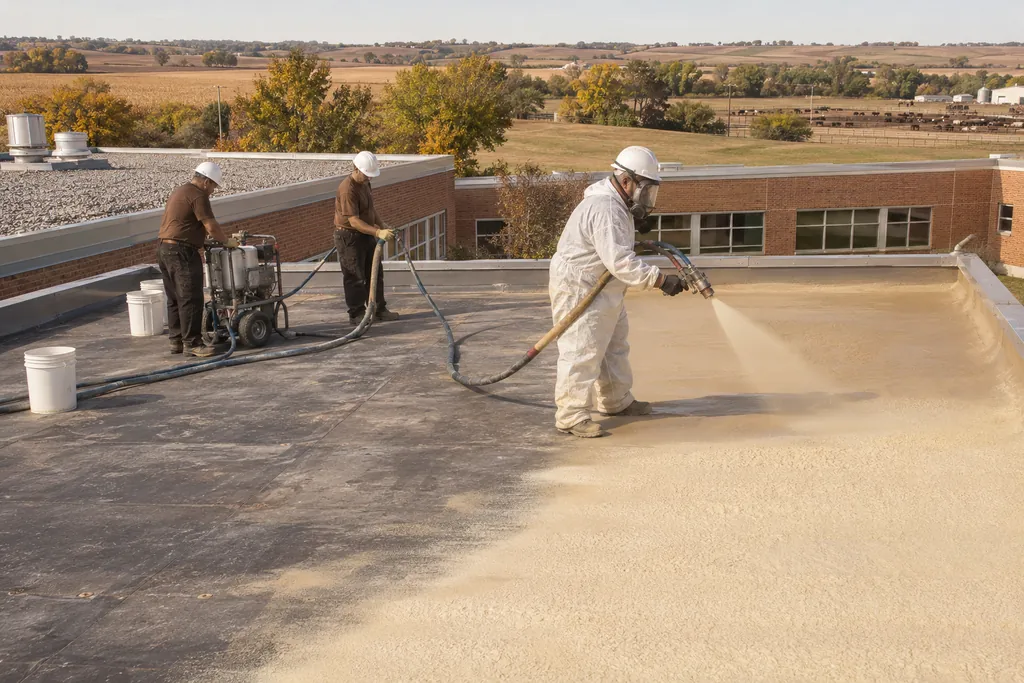
Spray Foam Roofing
- Best on: roofs that need added insulation
- Watch for: calm, dry weather and a topcoat
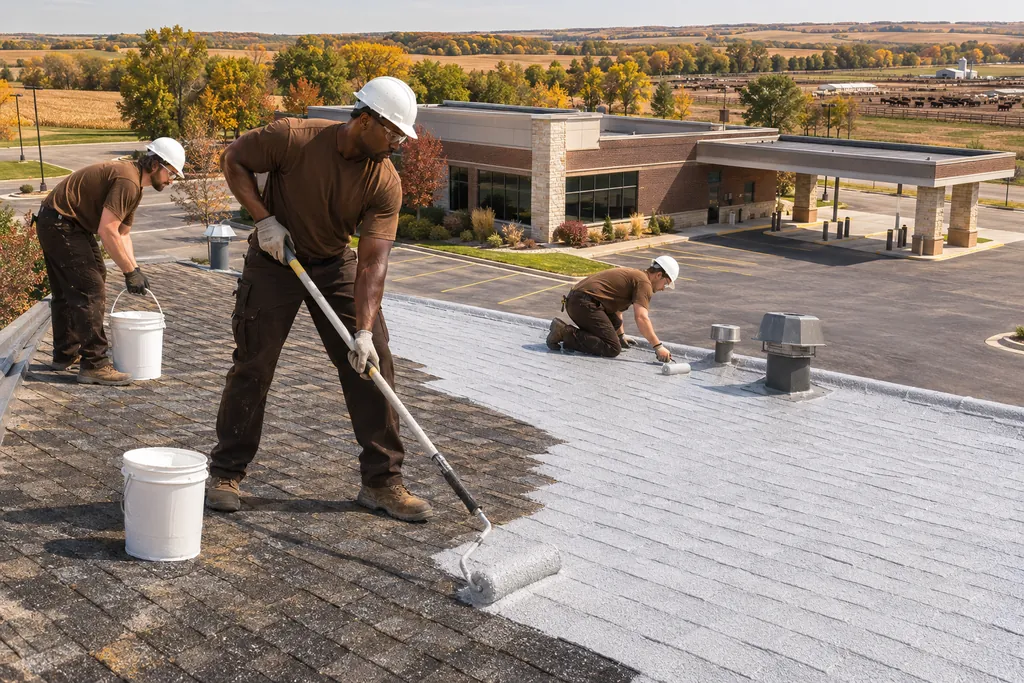
Shingle Roof Coating
- Best on: intact shingles on offices and churches
- Watch for: curled or missing tabs first
Who Gains
Benefits of Coating Your Roof
Silicone mainly helps flat and low spots, and each group below sees that benefit differently.
Owner
- Ponding areas stop wearing through the coating each spring
- Clean silicone takes more silicone later without a tear-off
- A bright white film reflects summer sun off the roof deck
Facility Manager
- One spray system covers laps, screws, and penetrations at once
- Hail damage gets patched with matching silicone in small spots
- Cold snaps leave the film flexible over moving metal
Tenants And Staff
- Fewer ceiling stains under the low end of the roof
- Less heat coming through the deck over offices and break rooms
- Work stays on the roof, away from the people below
Water Still Sitting Two Days After Rain?
Ponding is where silicone pays off. Give us the roof size and we will price a silicone system with the right thickness.
Work Sequence
How Norfolk Silicone Roof Coating Gets Applied
Silicone goes on in one heavy system, so the prep decides most of the result.
- 1On The Roof
Inspect Your Roof
We map where water ponds, test laps and screws, check drains, and look for wet insulation, which has to come out before any silicone goes over it.
- 2On The Roof
Clean And Test Adhesion
Washing removes dirt and chalking. We then run a pull test on a small patch so we know whether the surface takes silicone directly or needs primer.
- 3On The Roof
Reinforce Laps And Drains
Fabric is set into silicone at laps, curbs, and drain flashing, and backed-out screws are replaced and sealed before the main pass.
- 4On The Roof
Spray To Thickness
Silicone is sprayed in passes to the dry film thickness the manufacturer lists for your coverage, with extra build in the ponding areas.
Related Work
When Another System Fits Better Than Silicone Roof Coating in Norfolk
Silicone is one of five systems, and some roofs do better with another.
Commercial Metal Roof Coating
Steel roofs with heavy rust start with primer and fastener work under the topcoat.
Commercial metal roof coatingAcrylic Roof Coating
Pitched panels with no ponding can take acrylic at a lower material cost.
Acrylic roof coatingSpray Foam Roofing
Foam builds slope into flat spots and adds insulation, then takes a silicone topcoat.
Spray foam roofing
Questions
Silicone Roof Coating Questions From Norfolk Owners
What owners ask before choosing silicone.
Lifespan
How long does silicone roof coating last on steel?
That comes down to the dry film thickness, the prep, and how the roof is kept up. Manufacturers often rate silicone systems for 10 to 20 years by applied thickness, and ponding, foot traffic, and hail shorten it. When the film wears, clean silicone can take a fresh silicone coat rather than coming off.
What happens to a silicone roof after hail?
Hail can dent the panels and, in a hard storm, cut the film at laps and screws. The flexible film usually bends with a dent rather than cracking. After a storm we walk the roof, find torn coating and opened laps, and patch those spots with matching silicone. A dent with no tear is not a leak.
Cost
What drives silicone roof coating cost?
Square footage, the thickness you want, and the prep. Silicone costs more per gallon than acrylic, and a thicker build for longer manufacturer coverage uses more of it. Rust primer, lap fabric, and screw replacement add labor. As a planning range, coating runs about $2.50 to $4 per square foot.
Trade-Offs
What are the downsides of silicone roof coating?
Three stand out. Silicone holds dirt, which dulls the white surface. It is slick when wet, so crews and inspectors take care walking it. Few coatings stick to it, so every recoat stays silicone. It also costs more than acrylic, and on flat or ponding roofs those trade-offs are usually worth it.
Silicone or acrylic: which fits my building?
Silicone fits a low-slope roof that holds water after storms and needs a film that stays flexible in cold. Acrylic fits sloped steel that drains fast and costs less per gallon. We look at your drainage on the inspection and choose with you before pricing.
Hire a Norfolk Silicone Roof Coating Contractor
Tell us where water sits on your roof, and we will plan the silicone thickness for it.